Chris Lewis from Chris’ Cancer Community and I held our second Facebook Live chat on Thursday 18th August about cancer, anxiety and depression.
Below is a copy of the live chat, along with all the blogs and slides I’ve written or talked about around cancer and mental health. I’ve also added the notes and images from my chat with Chris so you’ve got them to refer to whenever you want.
Use this as a space to come back to when you want – you don’t have to consume all of this now or at one time.
Also, call someone you trust right now if you don’t feel you can cope, if you’ve seen that you are not alright and ask them to help you get the help you might need. You can also email me over on my contact page, but please know that I’m not an emergency contact.
Here’s the chat so you can see it again:
Part 1 – cancer, anxiety and depression
Part 2 – cancer, anxiety and depression
1. Slides from the Shine Connect Conference, May 2016
2. Blogs and chats about cancer, anxiety and other mental health issues:
Anxiety Q&A with Emily Hodge, MSc Health Psychology, Accredited Coach and Therapist
Feeling anxious? You’re not alone!
What do we misunderstand about anxiety?
Why do we feel so overwhelmed?!
Why are you not more grateful??
3. Main types of Anxiety and Depressive disorders:
Main types of anxiety disorders
· Generalised Anxiety disorder – excessive, ongoing anxiety and worry about a range of things, or not one specific thing that interferes with day to day activities
· Panic Disorder – a sudden episode of intense fear that triggers severe physical reactions when there appears to be no real danger or apparent cause
· Obsessive Compulsive Disorder – uncontrollable, or unreasonable, thoughts and fears (obsessions) that lead you to carry out repetitive behaviours (compulsions)
· Social Anxiety Disorder – where everyday interactions cause significant anxiety, fear, self-consciousness and embarrassment because you fear being scrutinised or judged by others
· Phobias – an overwhelming and unreasonable fear of an object or situation that poses little real danger but provoked anxiety and avoidance
· Post-traumatic Stress Disorder – uncontrollable and persistent flashbacks, nightmares, visions and anxiety triggered by experiencing or witnessing a terrifying event
Main types of depressive disorders
· Major depression – a persistent feeling of sadness and loss of interest
· Dysthymia – a continuous, long-term (chronic) form of depression
· Mixed depression and anxiety – persistent symptoms of both depressive disorder and anxiety disorders
· Bipolar disorder – extreme mood changes, from emotional highs (mania) to depressive lows
· Psychosis – causes people to perceive or interpret things differently from those around them, and may involve hallucinations or delusions
For a mental health issue to be diagnosed as a disorder, a number of symptoms would be present for a period of time or longer. Usually this means that the thoughts and feelings have consistently been there for over 2 weeks (in the case of generalised anxiety, for example) or to have gone past what might be considered a ‘normal’ adjustment period after a traumatic event (however ‘normal is defined!) in the case of PTSD, for example.
A GP, Clinical Psychologist or other appropriate professional would diagnose a disorder through talking with you about your symptoms, how long they have been going on for and how they impact your life.
Remember that it is also possible to live with mental health issues that may not be formally diagnosed, either because they are harder to spot, or there are not ‘enough’ symptoms to warrant a formal diagnosis, even though the symptoms may still have a negative impact on you. This would be classed as subclinical and it is still an important level of mental ill-health to be aware of and get support for.
4. Why are mental health issues more common with cancer?
- Trauma, pain and difficult memories from the cancer experience
- Changes to the body through treatment, side effects or long term health issues
- Difficulty in adjusting to a serious illness and it’s impact on the rest of your life
- Some people are more prone to mental health issues than others – it may be that a person’s cancer experience triggered their mental health issues that were ‘dormant’ or previously unrecognised
- Since a proportion of the population outside of cancer have a mental health issue, there will be others who have a diagnosed mental health issue before their cancer also
- Coping mechanisms and reactions may change during or after a cancer experience, which may contribute to having poorer mental health
- Lifestyle is impacted in both cancer and mental health in not dissimilar ways – it is often harder to work in the same way, harder to communicate with loved ones and others, it may be more difficult to eat, sleep and exercise well. These are all factors which will make both cancer and mental ill health harder to cope with
The diagram below shows how mental health is impacted by many areas of our lives – biologically, socially and psychologically, from our past, present and future:

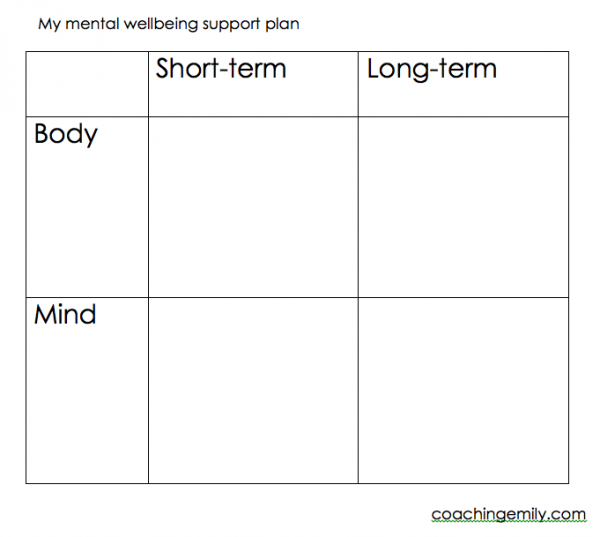
5. Self-support planner
6. External support planner
I will contact the following professionals about my mental health concerns:
1.
2.
3.
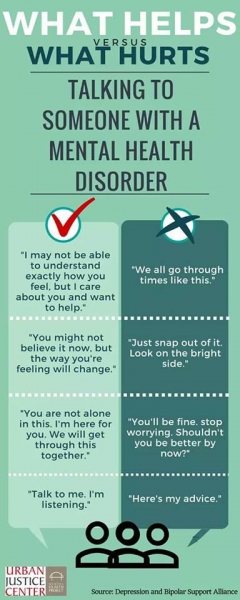
7. A handy guide on talking about mental health issues
I hope you enjoy the informal but informative chat we held – don’t hesitate to take the next step in being in touch with the right person, or people, to get the support you might need.
